


When winter temperatures drop and your feet need reliable protection from the cold, choosing the right sock material becomes essential. The debate over alpaca vs merino socks which is warmer continues to intrigue outdoor enthusiasts, hikers, and anyone seeking ultimate comfort during chilly months. Both natural fibers have earned stellar reputations for thermal regulation and moisture management, but understanding their distinct properties helps you make an informed decision. This comprehensive comparison explores the science behind these premium materials, examining fiber structure, insulation capabilities, and real-world performance to determine which truly delivers superior warmth.
The Science Behind Fiber Warmth
Understanding why certain materials keep your feet warmer requires examining the microscopic structure of each fiber. The question of alpaca vs merino socks which is warmer fundamentally depends on how these fibers trap air and resist heat loss.
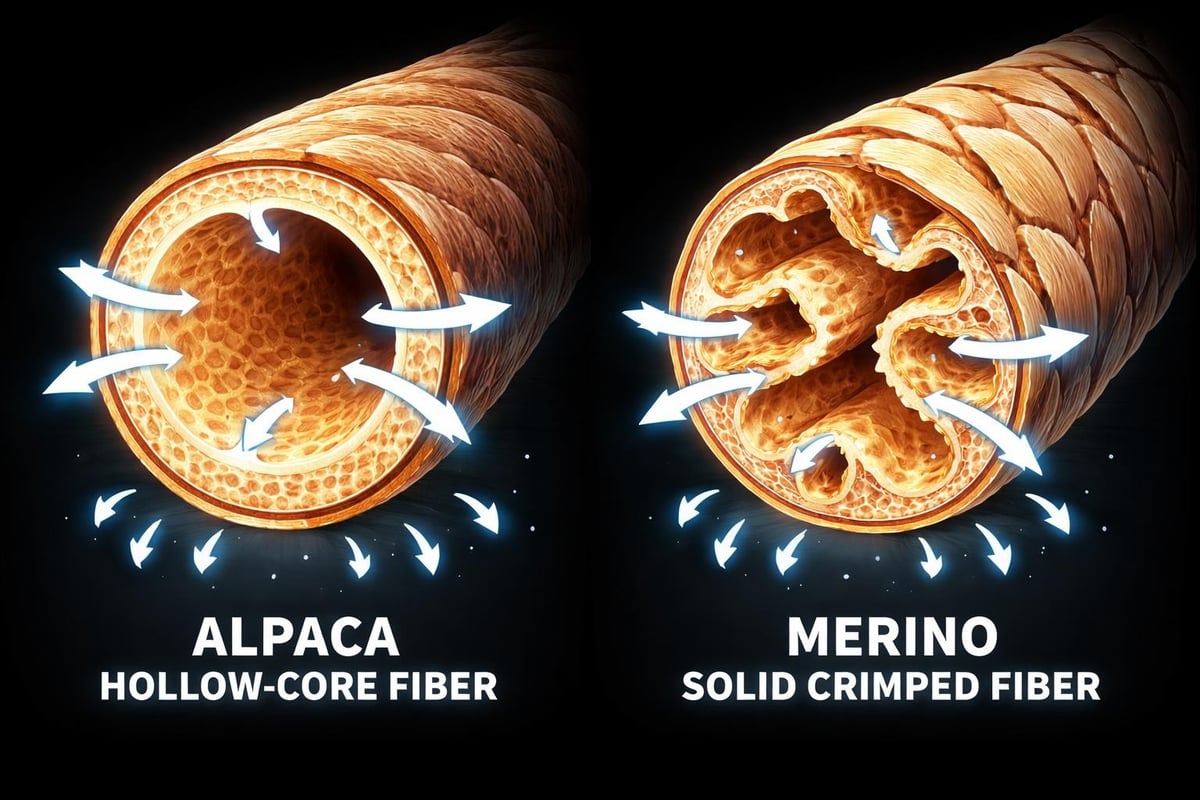
Alpaca fiber contains hollow cores that create tiny air pockets throughout the material. These microscopic chambers act as natural insulation, trapping warm air close to your skin while preventing cold air from penetrating. According to research on alpaca's thermal properties, this hollow structure makes alpaca fiber significantly warmer than many alternatives, including traditional sheep's wool.
Structural Differences That Matter
The architectural differences between these fibers directly impact their warming capabilities:
- Alpaca fibers: Smooth scales with hollow cores measuring 18-25 microns in diameter
- Merino fibers: Heavily crimped structure with solid cores measuring 15-24 microns
- Air trapping capacity: Alpaca's hollow design creates superior dead air space
- Density variations: Merino's crimp provides excellent loft but different insulation mechanics
Merino wool achieves warmth through its natural crimp, which creates air pockets between fibers rather than within them. This crimped structure gives merino exceptional elasticity and comfort, though the science behind their thermal properties reveals different mechanisms at work.
| Property | Alpaca Fiber | Merino Fiber |
|---|---|---|
| Core Structure | Hollow | Solid |
| Primary Insulation Method | Internal air pockets | Crimped loft between fibers |
| Micron Range | 18-25 | 15-24 |
| Thermal Rating | 3x warmer than sheep's wool | 2x warmer than regular wool |
The Cambridge Sock Company carefully selects alpaca and merino based on these structural advantages, ensuring our premium socks deliver maximum warmth while maintaining breathability.
Warmth Performance in Different Conditions
When evaluating alpaca vs merino socks which is warmer, environmental conditions dramatically influence performance. Each fiber responds differently to cold, moisture, and activity levels.
Dry Cold Conditions
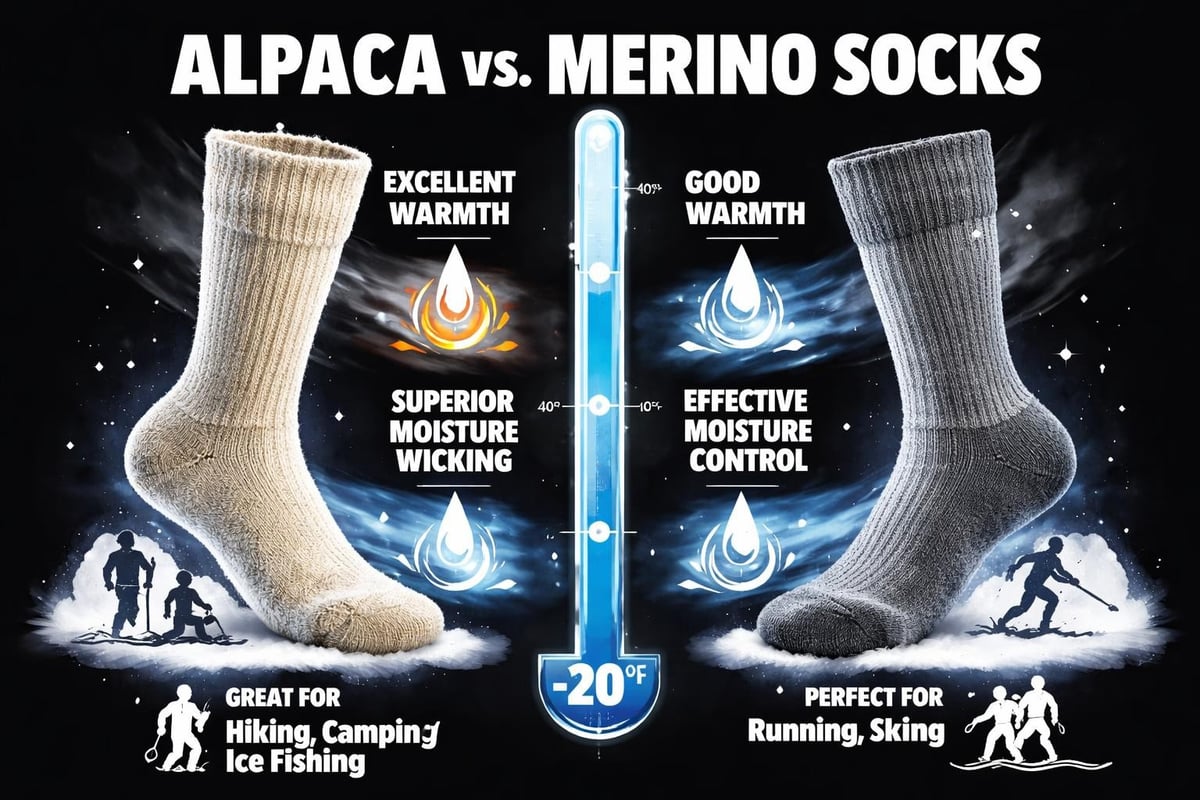
In dry, frigid environments, alpaca fiber demonstrates superior insulation. The hollow core structure provides exceptional warmth-to-weight ratio, meaning lighter socks deliver comparable or greater heat retention than heavier merino alternatives. Mountain climbers and Arctic explorers consistently report that alpaca socks keep feet warmer during extreme cold-weather expeditions.
Merino performs admirably in dry cold as well, with its fine crimp creating substantial loft. The fiber's natural elasticity helps socks maintain their shape and insulating properties even after extended wear.
Wet and Damp Scenarios
Here's where the comparison becomes nuanced. While merino wool can absorb up to 30% of its weight in moisture before feeling wet, alpaca's smooth fiber structure resists water absorption more effectively. Testing in sub-zero temperatures reveals that alpaca maintains warmth better when exposed to moisture.
Key performance factors in wet conditions:
- Alpaca retains approximately 85% of its insulating properties when wet
- Merino maintains roughly 70-75% of warmth retention when damp
- Alpaca dries 20-30% faster than merino due to lower water absorption
- Both fibers wick moisture away from skin more effectively than synthetic materials
The performance benefits of alpaca socks outdoors become particularly evident during activities like hiking, where feet generate perspiration even in cold weather.
Active vs Stationary Use
Movement generates heat, and your choice between alpaca and merino should consider activity levels. For high-intensity activities like winter trail running or skiing, merino's breathability prevents overheating while still providing adequate warmth. The fiber's natural elasticity also offers superior comfort during dynamic movement.
For stationary activities or low-intensity winter tasks, alpaca's maximum insulation becomes the priority. Ice fishing, winter photography, or simply standing outdoors in harsh conditions all favor alpaca's superior thermal retention.
Practical Considerations Beyond Pure Warmth
While determining alpaca vs merino socks which is warmer addresses thermal performance, several practical factors influence your ultimate satisfaction with either material.
Durability and Longevity
Merino wool contains natural elasticity that helps socks maintain shape and resist sagging. This crimp structure allows fibers to bend without breaking, contributing to excellent durability with proper care. Quality merino socks typically last 2-3 years with regular wear.
Alpaca fiber, while incredibly strong, lacks the same elastic recovery. Blending alpaca with small percentages of nylon or elastic materials solves this limitation while preserving the fiber's exceptional warmth. Pure alpaca socks may stretch slightly over time but remain remarkably durable against wear and tear.
Durability comparison:
- Merino excels in maintaining shape and fit
- Alpaca resists pilling and abrasion more effectively
- Both fibers naturally resist odor-causing bacteria
- Blended constructions optimize both materials' strengths
Softness and Comfort
The sensation against your skin matters significantly during extended wear. High-quality merino, particularly fine grades below 19 microns, feels incredibly soft and rarely causes irritation. The fiber's natural crimp creates a cushiony texture that many people find exceptionally comfortable.
Alpaca fiber offers luxurious softness that rivals cashmere, especially when sourced from younger animals (baby alpaca grade). Comparing merino and alpaca wool reveals that alpaca contains no lanolin, making it hypoallergenic and ideal for sensitive skin.
| Comfort Factor | Alpaca | Merino |
|---|---|---|
| Softness Rating | Exceptional (similar to cashmere) | Excellent (fine grades) |
| Hypoallergenic | Yes (no lanolin) | Generally yes (trace lanolin) |
| Cushioning | Moderate | Excellent (due to crimp) |
| Smoothness | Very smooth | Slightly textured |
Price and Value Proposition
Premium natural fiber socks represent an investment in foot comfort and health. Alpaca fiber typically costs more than merino due to limited supply and specialized processing requirements. Alpacas produce less fleece annually than sheep, creating natural scarcity.
Merino wool, particularly from New Zealand and Australia, benefits from established supply chains and economies of scale. Quality merino socks offer excellent value, balancing performance with accessibility.
When considering value, factor in longevity, performance benefits, and versatility across activities. The Cambridge Sock Company balances these considerations through thoughtful designs that maximize each fiber's natural advantages.
Moisture Management and Breathability
The ongoing question of alpaca vs merino socks which is warmer must address moisture management, as damp feet feel colder regardless of fiber quality.
Wicking Properties
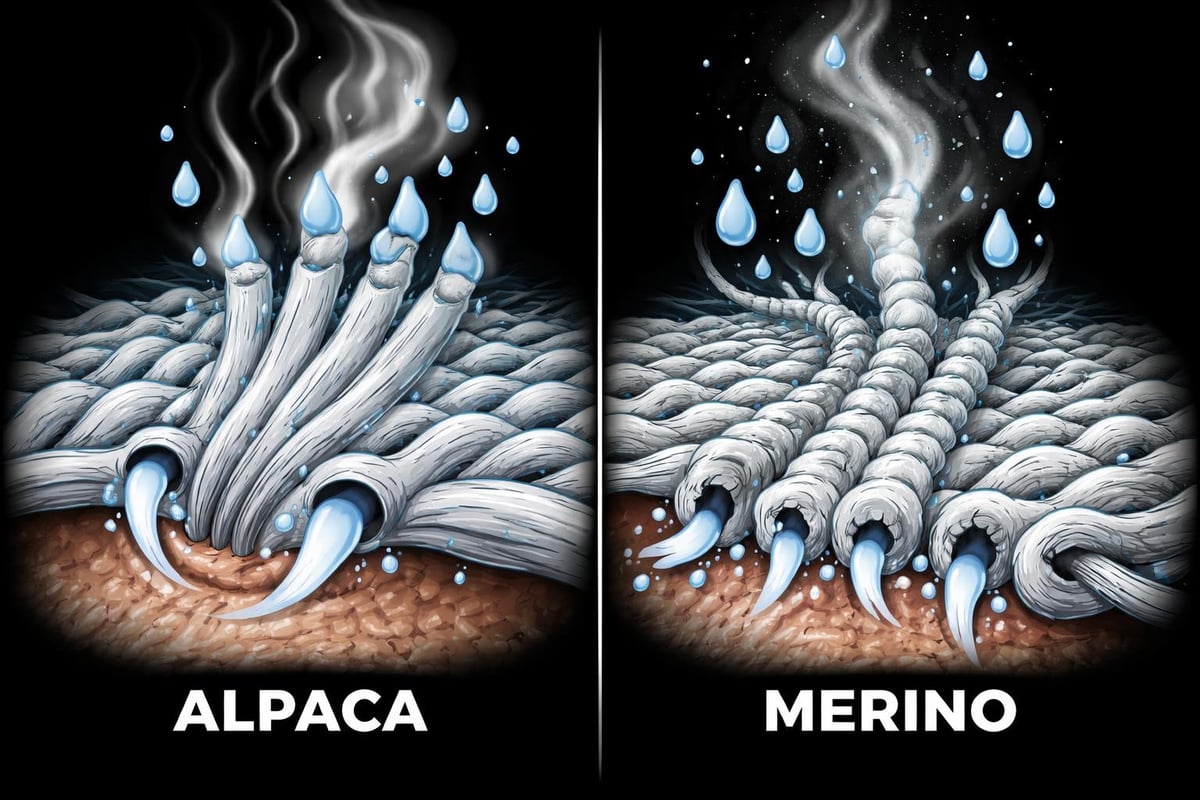
Both fibers excel at moving moisture away from skin through capillary action. Merino's crimped structure creates numerous pathways for moisture to travel outward, while alpaca's smooth surface facilitates rapid moisture transfer.
Moisture wicking comparison:
- Merino: Absorbs moisture into fiber core, then releases it gradually
- Alpaca: Repels moisture from fiber surface, promoting faster evaporation
- Combined effect: Both keep skin feeling dry despite different mechanisms
- Practical outcome: Neither fiber feels clammy when properly fitted
Temperature Regulation
Truly warm socks prevent both cold and overheating. Merino's natural crimp creates variable insulation that adapts to temperature changes. The fiber's ability to absorb moisture without feeling wet helps regulate foot temperature during varying activity levels.
Alpaca provides more consistent insulation across temperature ranges. Research on outdoor performance indicates that alpaca's thermal properties remain stable whether you're active or resting, making it ideal for unpredictable conditions.
The breathability of both natural fibers far exceeds synthetic alternatives. Neither traps heat excessively, allowing proper air circulation while maintaining warmth. This balance prevents the sweaty, overheated feeling common with non-breathable materials.
Choosing the Right Fiber for Your Needs
Determining alpaca vs merino socks which is warmer ultimately depends on your specific requirements, activities, and preferences. Consider these decision factors:
Climate and Environment
Choose alpaca when:
- Facing extremely cold temperatures regularly (below 20°F)
- Spending extended periods in stationary cold conditions
- Needing maximum warmth in minimal thickness
- Dealing with wet, cold environments where moisture resistance matters
Choose merino when:
- Experiencing moderate cold (20-45°F) most frequently
- Engaging in high-activity winter sports
- Requiring versatile socks for varying conditions
- Prioritizing elasticity and shape retention
Activity Level Matching
High-intensity activities generate significant foot perspiration. Merino's superior elasticity and excellent moisture absorption make it ideal for:
- Winter hiking and trekking
- Ski touring and snowshoeing
- Running in cold weather
- Any activity involving constant movement
Low-to-moderate intensity situations benefit from alpaca's maximum insulation:
- Winter walking and casual outdoor activities
- Everyday cold-weather wear
- Outdoor work in stationary positions
- Relaxing indoors during winter evenings
Special Considerations
Individual factors influence the alpaca vs merino decision beyond general guidelines:
| Consideration | Alpaca Advantage | Merino Advantage |
|---|---|---|
| Sensitive skin | Hypoallergenic, no lanolin | Generally gentle, minimal irritation |
| Circulation issues | Maximum warmth for cold feet | Good warmth with compression options |
| Sweaty feet | Faster drying, moisture resistant | Superior absorption capacity |
| Budget consciousness | Premium investment | More accessible pricing |
| Sustainability concerns | Low environmental impact | Renewable, biodegradable |
Those exploring natural fiber options discover that both materials offer environmental benefits compared to synthetics, supporting sustainable fashion choices.
Blended Solutions and Hybrid Options
Rather than choosing exclusively between fibers, many premium sock manufacturers combine materials to harness complementary strengths. The question of alpaca vs merino socks which is warmer becomes less binary when blends optimize performance.
Strategic Fiber Blending
Combining alpaca and merino creates socks that deliver:
- Alpaca's superior insulation with merino's elasticity
- Maximum warmth retention with excellent moisture management
- Luxurious softness with practical durability
- Thermal efficiency across broader temperature ranges
Typical blend ratios range from 50/50 to 70/30 (alpaca/merino), though proportions vary based on intended use. Some manufacturers add small percentages of nylon or elastic (5-15%) for enhanced durability and fit.
Performance Yarn Constructions
Advanced knitting techniques further enhance natural fiber performance. Multi-ply yarns, cushioned foot beds, and strategic reinforcement zones maximize comfort and longevity. How premium socks are crafted reveals the importance of construction quality alongside fiber choice.
Construction elements that enhance warmth:
- Terry loop cushioning: Adds air pockets for insulation
- Ribbed cuffs: Maintain circulation while preventing heat loss
- Seamless toe closures: Eliminate cold spots and pressure points
- Arch support bands: Improve fit and thermal efficiency
Seasonal Sock Rotation
Serious outdoor enthusiasts often maintain sock collections featuring both fibers for different conditions. This approach optimizes performance across seasons and activities without compromise.
A practical rotation might include:
- Heavy alpaca socks: Deep winter and extreme cold
- Alpaca-merino blends: Shoulder season versatility
- Pure merino mid-weight: Active winter pursuits
- Lightweight merino: Spring and fall transitional weather
Care and Maintenance for Maximum Performance
Regardless of which fiber you choose when considering alpaca vs merino socks which is warmer, proper care preserves thermal properties and extends sock life.
Washing Guidelines
Both natural fibers require gentle handling to maintain structure and performance:
For alpaca socks:
- Hand wash in cool water with mild detergent
- Avoid agitation and wringing
- Lay flat to dry away from direct heat
- Never use fabric softener (reduces natural wicking)
For merino socks:
- Machine wash gentle cycle in cool water (inside mesh bag)
- Use wool-specific detergent when possible
- Tumble dry low heat or air dry
- Avoid chlorine bleach and harsh chemicals
Temperature extremes during washing can felt both fibers, permanently reducing loft and warmth. Proper care techniques significantly extend sock lifespan while maintaining peak performance.
Storage Best Practices
Between wears and during off-season storage:
- Ensure socks are completely dry before storing
- Fold rather than roll to prevent stress on fibers
- Store in breathable containers (avoid plastic bags)
- Use cedar or lavender sachets for natural moth protection
- Keep away from direct sunlight to prevent color fading
Proper rotation between multiple pairs allows fibers to fully dry and recover their loft, maintaining optimal warmth retention over time.
Real-World Applications and User Experiences
Understanding alpaca vs merino socks which is warmer benefits from examining how each performs in actual use scenarios reported by outdoor enthusiasts and daily wearers.
Mountain and Winter Sports
Mountaineers frequently choose alpaca for high-altitude expeditions where temperatures plummet and moisture management becomes critical. The fiber's ability to maintain warmth when wet, combined with lighter weight compared to equivalent merino thickness, makes it ideal for multi-day backcountry trips where pack weight matters.
Conversely, active skiers and snowboarders often prefer merino's elasticity and breathability. The constant movement generates heat and perspiration, conditions where merino excels at temperature regulation without causing overheating.
Daily Winter Wear
For everyday cold-weather comfort, personal preference weighs heavily. Some individuals with perpetually cold feet swear by alpaca's maximum insulation, wearing premium alpaca socks throughout winter months regardless of activity.
Others appreciate merino's versatility for commuting, office wear, and varied daily activities. The fiber transitions seamlessly from outdoor cold to heated indoor environments without causing discomfort.
Specialized Requirements
Certain situations clearly favor one fiber over another:
Alpaca excels for:
- Cold-weather photography (stationary in extreme conditions)
- Ice fishing and winter hunting
- Outdoor market vendors and workers
- Anyone with Raynaud's syndrome or circulation challenges
Merino performs best for:
- Long-distance winter hiking (trail performance)
- Winter cycling and running
- Variable indoor-outdoor transitions
- Multi-day wear without washing opportunities
Both alpaca and merino wool offer exceptional warmth and performance, with alpaca providing superior insulation in extreme cold while merino delivers unmatched versatility and elasticity for active pursuits. Your ideal choice depends on specific activities, climate conditions, and personal comfort preferences. Whether you need maximum thermal protection or all-around winter performance, The Cambridge Sock Company crafts premium socks from both exceptional natural fibers, ensuring your feet stay comfortable and warm throughout the coldest months with quality British craftsmanship you can trust.