


In 2025, the debate over alpaca socks vs merino wool is heating up as more people look for socks that deliver comfort, warmth, and sustainability. With the move away from synthetic fibers, natural options are in high demand for their unique feel and eco-friendly qualities. Alpaca and merino wool each offer distinct properties, but their differences might surprise you. Throughout this article, we will break down which fiber truly shines for daily wear, outdoor adventures, sensitive skin, and those who care about the planet. Explore our in-depth, side-by-side analysis to find out which sock is the best fit for your needs in 2025. We will cover fiber properties, comfort, performance, sustainability, price, and real-world use cases.
Fiber Properties: Alpaca vs Merino Wool
The debate around alpaca socks vs merino wool starts at the very foundation: the fibers themselves. Understanding where these fibers come from, how they're structured, and their unique characteristics helps you make an informed choice. Let's break down the key differences and similarities that matter most in 2025.
Origin and Sourcing
When comparing alpaca socks vs merino wool, the story begins with geography. Alpaca fibers are sourced mainly from South American countries, especially Peru, where alpacas graze at high altitudes. Merino wool, on the other hand, is predominantly produced in Australia and New Zealand, where merino sheep thrive in diverse climates.
Farming practices for both animals have evolved to prioritize ethical treatment, but alpacas generally require less land and water. This makes their farming more sustainable in some regions. Annual yield differs greatly: merino sheep produce a global total of about 350,000 tonnes of wool each year, while alpaca fiber production is much lower at around 5,000 tonnes. Climate and geography impact the fineness and warmth of both fibers—think Peruvian alpaca versus Australian merino, each with its signature quality.
Structure and Composition
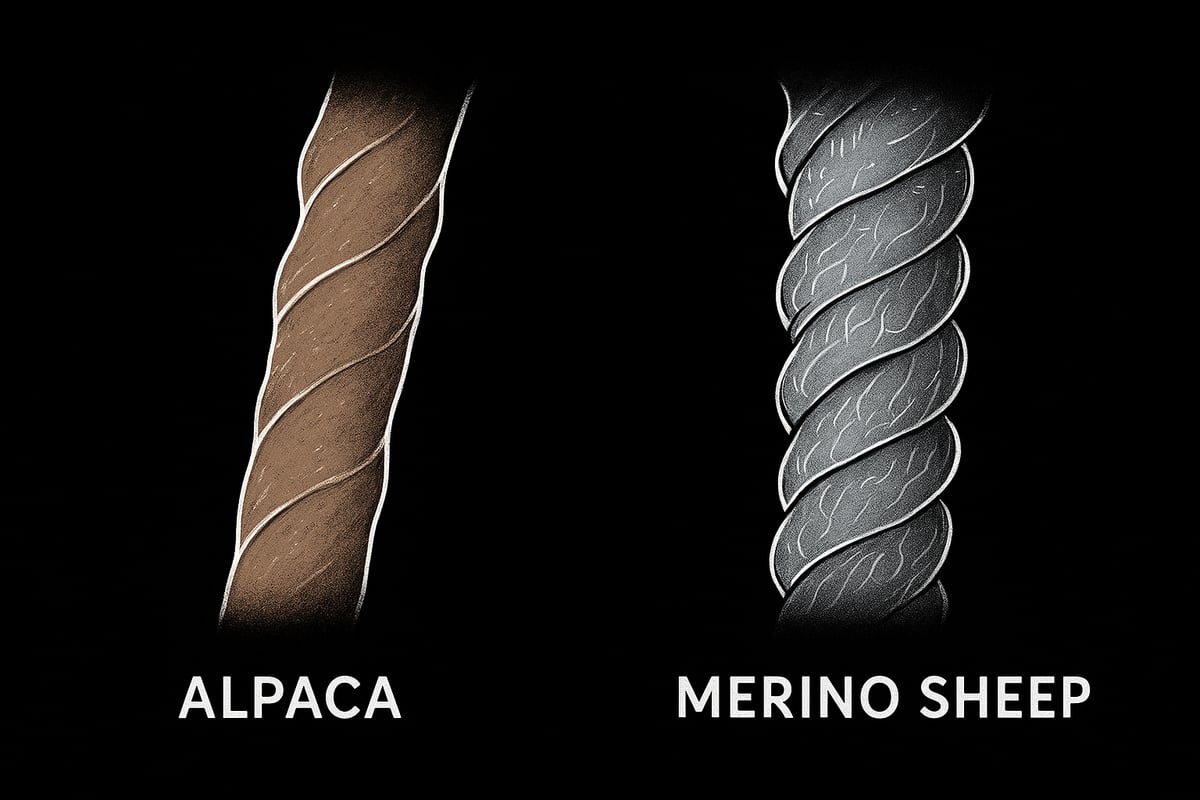
The structure of the fibers is central to the alpaca socks vs merino wool debate. Alpaca fibers typically range from 18 to 25 microns, while merino wool can be even finer, at 15 to 24 microns. However, alpaca fiber is smoother, with fewer scales, which makes it less itchy for many wearers.
A key difference is alpaca's hollow core, which boosts insulation without adding bulk. Merino wool, while soft and crimped, contains lanolin, a natural oil that some people find irritating. Alpaca lacks lanolin, making it a top choice for sensitive skin. These structural differences affect softness and warmth, with both fibers prized for their luxurious feel. Learn more about these unique qualities and how they impact your sock choice in this Alpaca vs. Merino Wool Socks comparison.
| Fiber | Micron Count | Structure | Lanolin | Hollow Core | Softness |
|---|---|---|---|---|---|
| Alpaca | 18–25 | Smoother | No | Yes | Buttery |
| Merino Wool | 15–24 | Scaly, Crimp | Yes | No | Silky |
Thermal Insulation and Breathability
Alpaca socks vs merino wool also comes down to thermal performance. Alpaca offers up to 30 percent more warmth for its weight, thanks to its hollow fibers. This makes alpaca socks a favorite for extreme cold.
Merino wool shines in temperature regulation, efficiently wicking moisture and keeping feet dry. Lab tests show merino can absorb up to 30 percent of its weight in moisture, while alpaca absorbs about 10 percent. Both fibers breathe well, but merino is often preferred for active use in varying climates, while alpaca excels at trapping warmth in frigid conditions.
Hypoallergenic Properties
One of the most compelling reasons people choose alpaca socks vs merino wool is skin sensitivity. Alpaca fibers are naturally hypoallergenic due to the absence of lanolin, making them ideal for those with allergies or eczema. Merino wool, while much less itchy than traditional wool, does contain lanolin, which can cause irritation for some.
Dermatologists often recommend alpaca for those with sensitive skin. Studies indicate that up to 6 percent of people may experience wool-related allergies, making hypoallergenic options increasingly important. For families with children or anyone prone to irritation, alpaca offers a gentle alternative.
Durability and Longevity
Durability is another key factor in the alpaca socks vs merino wool conversation. Alpaca fibers are known for their strong tensile strength, resisting pilling and abrasion even after repeated wear. Merino wool is also durable, especially in finer grades, but can pill more easily over time.
Field tests among hikers reveal that both types of socks perform admirably, but alpaca often edges ahead in terms of longevity. On average, alpaca socks can outlast merino counterparts, sometimes by several months, depending on care and use. Proper washing and air drying further extend the life of both fibers.
Comfort and Wearability: Day-to-Day Experience
Choosing between alpaca socks vs merino wool is about more than just warmth. True comfort comes down to softness, fit, moisture control, temperature regulation, and sensitivity. Let’s break down how both fibers perform in real-life, everyday scenarios so you can find the perfect pair for your feet.
Softness and Feel
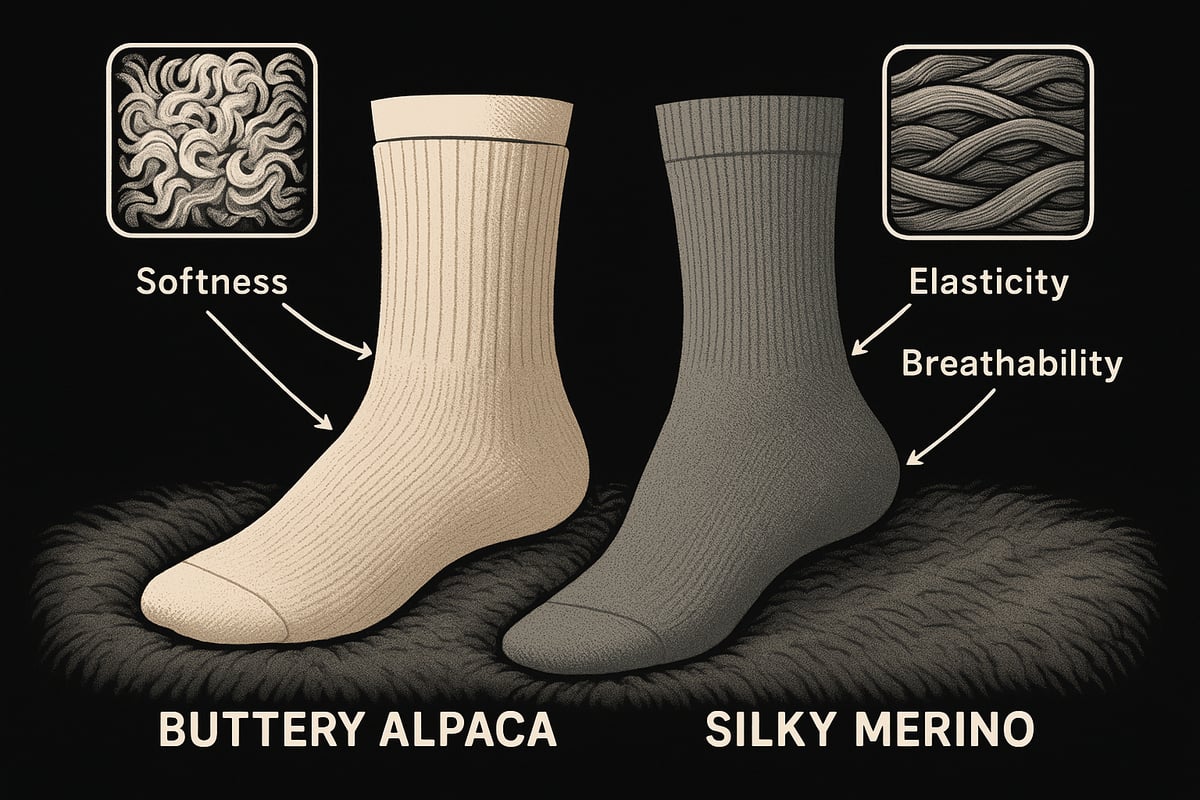
When it comes to the softness of alpaca socks vs merino wool, the difference is subtle but noticeable. Alpaca fibers are often described as “buttery,” gliding smoothly against the skin. Merino, on the other hand, feels “silky” and plush due to its fine micron count. Both are leagues above traditional wool in comfort.
Micron count plays a significant role here. Alpaca typically ranges from 18 to 25 microns, while merino can be as fine as 15 microns. This makes both options itch-free for most people. Many users report that after trying both, they notice alpaca feels slightly loftier, while merino hugs the foot more closely.
For those with sensitive skin, it’s worth noting that a recent Merino vs Alpaca Wool Socks: Comfort, Sensitivity & OEM Insights article highlights how both fibers excel in comfort, but alpaca’s lack of lanolin makes it a top pick for those prone to irritation. Customer reviews frequently mention zero itch and all-day comfort, making both fibers a treat for your feet.
Fit and Stretch
The fit of alpaca socks vs merino wool comes down to fiber structure and elasticity. Merino wool is naturally crimped, which gives it excellent stretch and rebound. This helps merino socks keep their shape and gently hug the foot with each step.
Alpaca fibers, by comparison, are straighter and less elastic. Pure alpaca socks may feel looser over time, especially after multiple wears. To combat sagging, many brands blend alpaca with small amounts of nylon or elastane. This ensures a snug fit without sacrificing natural comfort.
If you prefer a sock that stays firmly in place, merino is the winner for long-lasting stretch. For a roomier, more relaxed fit, alpaca is a wonderful option, especially when blended for durability. The choice in alpaca socks vs merino wool comes down to your daily activities and how much you value sock retention.
Moisture Management
Moisture control is a big factor in the alpaca socks vs merino wool debate. Merino wool is legendary for its ability to wick away sweat, absorbing up to 35 percent of its weight in moisture while still feeling dry. This makes merino socks a favorite for athletes and anyone on their feet all day.
Alpaca, in contrast, is naturally resistant to moisture absorption, holding closer to 10 percent. This means alpaca socks dry quickly and rarely feel heavy or damp. Both fibers have natural antibacterial properties, but merino’s structure gives it a slight edge in odor control during intense activity.
Here’s a quick comparison:
| Feature | Alpaca Socks | Merino Wool Socks |
|---|---|---|
| Moisture Absorb. | Up to 10% | Up to 35% |
| Drying Speed | Fast | Moderate |
| Odor Resistance | High | Very High |
Ultimately, the alpaca socks vs merino wool choice depends on how much you sweat and your activity level.
Temperature Regulation in Real Life
Temperature control is a hallmark of both alpaca socks vs merino wool. Alpaca fibers have a hollow core, trapping warmth and offering impressive insulation. This makes alpaca socks up to 30 percent warmer than merino in cold conditions, perfect for winter nights and chilly mornings.
Merino wool, meanwhile, excels at regulating temperature across a wide range. Its breathability and moisture-wicking properties keep feet cool in summer and cozy in winter. Outdoor enthusiasts often praise merino for its adaptability, making it a go-to for hiking and travel.
Real-world feedback shows that alpaca shines in the cold, while merino handles everything from frosty trails to warm office days. If you need socks for all seasons, consider how your feet respond to heat and chill when choosing between alpaca socks vs merino wool.
Itchiness and Sensitivity
For anyone with sensitive skin, the alpaca socks vs merino wool question is crucial. Alpaca contains no lanolin, making it hypoallergenic and a gentle choice for those with eczema or wool allergies. Merino, especially in fine grades, is also soft and itch-free for most people, but trace lanolin can cause irritation for a small percentage.
Doctors and pediatricians often recommend both fibers for children and those with skin sensitivities. However, alpaca’s smooth scales and absence of lanolin give it a slight advantage for the most delicate skin. Both options are leaps ahead of traditional wool in comfort and safety for sensitive feet.
In summary, if itchiness is your main concern, alpaca socks vs merino wool both deliver, but alpaca may be the gentlest option.
Performance: Outdoor, Sport, and Everyday Use
Choosing between alpaca socks vs merino wool is about more than just softness. When it comes to real-world performance, each fiber has unique strengths for outdoor, sport, and daily wear. Let’s break down how they stack up in warmth, breathability, support, odor control, care, and durability.
Warmth and Cold Weather Performance
When you pit alpaca socks vs merino wool in cold conditions, both impress, but with subtle differences. Alpaca fibers have a unique hollow core, trapping more air and providing up to 30 percent greater warmth for their weight. This makes alpaca socks a top choice for sub-zero temperatures and stationary activities, like winter camping or ice fishing.
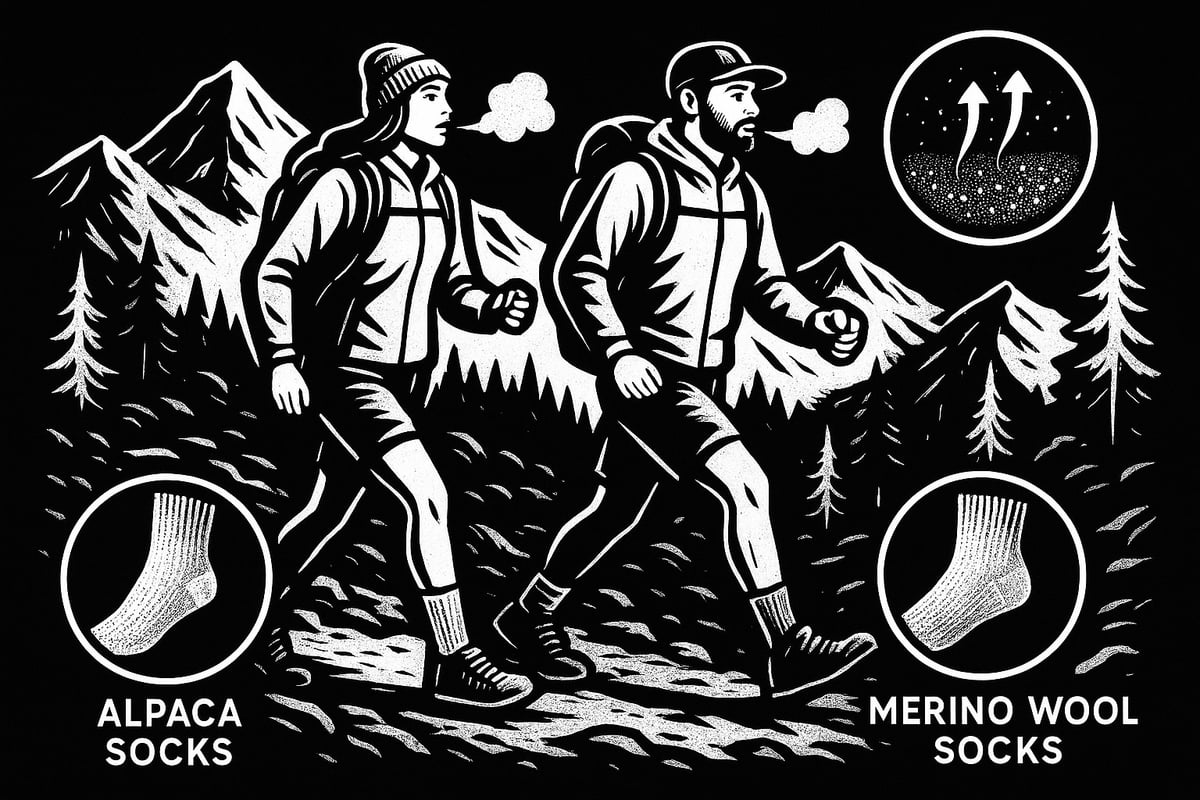
Merino, however, adapts dynamically to body temperature. Its crimped fibers insulate well, but also release heat during high activity. For hikers or skiers who alternate between rest and movement, merino excels at keeping feet warm without overheating.
Thermal imaging studies show both fibers outperform synthetics, but alpaca edges ahead in static cold, while merino leads during variable exertion. For a deep dive into field-tested differences, see the Alpaca vs. Wool: Work Sock Performance comparison.
Breathability and Summer Suitability
Alpaca socks vs merino wool is not just a winter debate. In hot weather, breathability becomes crucial. Merino wool is famous for its moisture vapor transmission, allowing sweat to evaporate quickly and keeping feet cool and dry during summer hikes or runs.
Alpaca fibers are naturally breathable, too, but absorb less moisture—roughly 10 percent compared to merino’s 30 percent. This means alpaca stays dry to the touch, but merino wicks sweat away more efficiently, making it a favorite for athletes and those prone to sweaty feet.
Feedback from runners and hikers confirms merino’s edge for all-day summer comfort. Still, alpaca offers surprising coolness for casual warm-weather wear, especially for those sensitive to dampness.
Cushioning and Support
For all-day comfort, cushioning and support are vital in the alpaca socks vs merino wool debate. Alpaca socks often feel plush and thick, delivering luxurious cushioning, especially in bed or boot socks. This plushness makes them ideal for reducing pressure during long periods of standing.
Merino socks, thanks to their natural elasticity, mold well to the foot and retain their shape even after repeated wear. Reinforced heels and toes are common in both, but merino’s crimp provides a springy support that adapts to movement.
| Feature | Alpaca Socks | Merino Wool Socks |
|---|---|---|
| Plushness | High | Medium |
| Support | Good | Excellent |
| Shape Retention | Moderate | High |
In summary, alpaca wins on plushness, merino on active support.
Odor and Bacteria Resistance
Odor control is a must for anyone wearing socks multiple days in a row. When comparing alpaca socks vs merino wool, both resist bacteria naturally. Merino contains lanolin, a substance with antibacterial properties, while alpaca resists odor by repelling moisture where bacteria thrive.
Multi-day trekkers report that both fibers stay fresh longer than cotton or synthetics, even after long hikes. Alpaca’s dryness further deters bacterial growth, making them suitable for sensitive or sweaty feet. Merino, meanwhile, is a go-to for runners and hikers who prioritize odor-free performance in all climates.
Drying Time and Care
Caring for alpaca socks vs merino wool socks is straightforward, but there are differences. Merino dries faster due to its ability to absorb and then release moisture, making it ideal for washing on the go, such as during multi-day hikes.
Alpaca socks, being less absorbent, take a bit longer to dry if saturated, but are less likely to feel wet in the first place. Both fibers resist shrinking when washed properly—always follow care instructions for best results. Laundry tests show merino regains its shape quickly, while alpaca’s plushness lasts through many washes.
Real-World Endurance: Case Studies
The true test of alpaca socks vs merino wool comes from real users. Long-distance hikers on trails like the Appalachian Trail note that merino socks often last 500+ miles before thinning or pilling. Alpaca socks, while equally soft after months of wear, sometimes develop holes in high-friction areas sooner if not blended with synthetics.
In urban settings, both types perform well, resisting odor and keeping feet comfortable for commuters and travelers. Sock durability surveys suggest merino blends lead in lifespan, while pure alpaca scores highest for luxury and softness, especially in daily home use.
Sustainability and Ethical Impact
As the conversation around alpaca socks vs merino wool intensifies, sustainability and ethics are front and center for conscious consumers. Let us break down how these two natural fibers stack up in their journey from farm to foot.
Environmental Footprint
When comparing alpaca socks vs merino wool, the environmental footprint is a crucial factor. Alpacas are gentle grazers, requiring less land and water than merino sheep. Their padded feet help prevent soil erosion, and they produce significantly less methane, making them more climate friendly.
Merino sheep, while raised on vast pastures in Australia and New Zealand, require more resources and contribute more greenhouse gases. According to environmental studies and Are Alpaca Socks Warmer Than Wool?, alpaca farming generally has a lower ecological impact.
Here is a quick comparison:
| Factor | Alpaca | Merino Sheep |
|---|---|---|
| Water Usage | Low | Moderate/High |
| Land Impact | Minimal | Significant |
| Methane Emissions | Very Low | High |
Choosing between alpaca socks vs merino wool often comes down to these sustainability differences.
Animal Welfare and Ethical Practices
Animal welfare is a top concern in the alpaca socks vs merino wool debate. Alpacas are shorn once a year, generally without harm, and often as part of small, community-based herds in Peru. Ethical certifications, such as Fair Trade Alpaca, ensure humane treatment.
Merino sheep are also shorn annually, but practices vary. The Responsible Wool Standard certifies humane treatment and responsible land management for merino flocks. Leading brands prioritize these certifications and transparent sourcing.
For shoppers who value ethical treatment, both alpaca and merino can be responsible choices, provided you look for trusted certifications. This makes the alpaca socks vs merino wool decision more about personal values and brand ethics.
Biodegradability and End-of-Life
One of the main benefits in the alpaca socks vs merino wool discussion is biodegradability. Both fibers are 100% natural, breaking down in soil within months to a few years, unlike synthetics which linger for centuries.
Neither alpaca nor merino releases microplastics during washing or disposal. Composting your old socks is a real option, returning nutrients to the earth. Studies show alpaca fibers decompose a bit faster due to their smoother structure, but both options offer a genuinely eco-friendly end-of-life.
If you are aiming to reduce landfill waste, alpaca socks vs merino wool both deliver on this green promise.
Socioeconomic Impact
The story of alpaca socks vs merino wool goes beyond the environment. Alpaca farming supports indigenous communities in Peru, providing stable income and preserving traditional skills. Many cooperatives offer fair wages and invest in local development projects.
Merino wool production is vital to rural economies in Australia and New Zealand, creating jobs and supporting families. Ethical brands work directly with farmers to ensure fair practices across the supply chain.
Ultimately, choosing alpaca socks vs merino wool means supporting livelihoods and cultures worldwide. Consider how your purchase can positively impact both people and planet.
Price, Value, and Accessibility in 2025
The landscape for alpaca socks vs merino wool has evolved in 2025, especially as consumers become more mindful of quality and sustainability. Prices, value, and accessibility are top of mind for shoppers seeking the best balance between luxury and practicality. Let's break down how these two fibers stack up this year.
Market Prices and Trends
In 2025, the price gap for alpaca socks vs merino wool remains noticeable. Alpaca socks often cost more because alpaca fiber is rarer, with global production hovering around 5,000 tonnes annually compared to merino's 350,000 tonnes. This scarcity, combined with the labor-intensive harvesting process, drives up the cost.
| Sock Type | Average Price (2025) | Key Influences |
|---|---|---|
| Alpaca | £20–£35 | Rarity, luxury appeal |
| Merino Wool | £12–£25 | Abundance, versatility |
Seasonal demand and increased eco-consciousness have also nudged prices higher. However, many shoppers feel the investment in alpaca socks vs merino wool is justified by the unique benefits each fiber offers.
Value for Money
When considering alpaca socks vs merino wool, value for money is more than just the price tag. Alpaca socks, while initially pricier, often boast greater longevity due to their robust fibers and resistance to pilling. Merino wool socks shine in everyday use, offering impressive comfort and performance at a slightly lower cost.
Cost per wear is an important metric. Alpaca socks tend to last longer in low-impact scenarios, such as lounging or gentle walking. Merino wool socks, favored for their resilience in active settings, also offer excellent value through durability and versatility. Ultimately, the right choice depends on your personal priorities for alpaca socks vs merino wool.
Availability and Selection
The availability of alpaca socks vs merino wool is broader than ever before. Merino options are plentiful, with a wide spectrum of styles, sizes, and colors in both online and brick-and-mortar stores. Alpaca socks, though more exclusive, are now easier to find thanks to specialty retailers and growing consumer demand.
If you want to explore the full range of Alpaca Socks Collection or compare the diverse Merino Wool Socks Collection, dedicated online shops make it simple to find your ideal pair. This accessibility ensures everyone can try both fibers and decide which wins in the alpaca socks vs merino wool debate.
The Cambridge Sock Company: Premium Natural Fiber Socks
The Cambridge Sock Company stands out in the alpaca socks vs merino wool market for its British craftsmanship and dedication to natural fibers. Their product range covers everything from cozy bed socks to durable walking options, all designed for optimal comfort and performance.
Committed to sustainability and ethical sourcing, the company guarantees customer satisfaction and offers free delivery on orders over £60. With over 369,000 pairs sold and a loyal base of 25,000+ customers, they have earned a reputation for quality in the world of alpaca socks vs merino wool. Shoppers can trust their selection to deliver on both comfort and values.
Best Use Cases: Who Should Choose Alpaca or Merino in 2025?
Choosing between alpaca socks vs merino wool can feel overwhelming, especially with so many new options in 2025. The best choice depends on your lifestyle, environment, and personal priorities. Let’s break down who should opt for which fiber, so you can find your perfect fit.
Alpaca Socks: Ideal Scenarios
Alpaca socks are the top pick for anyone seeking maximum warmth and plush comfort. If you have sensitive skin, struggle with wool allergies, or want the ultimate cozy experience, alpaca wins in the alpaca socks vs merino wool debate.
- Best for cold climates and chilly homes
- Perfect for people with eczema or lanolin sensitivity
- Excellent for those who value luxury and softness
Elderly individuals, people with Raynaud’s syndrome, or anyone needing gentle, itch-free warmth will benefit most. For indoor wear, lounging, or sleeping, alpaca socks provide unmatched comfort and insulation.
Merino Wool Socks: Ideal Scenarios
For an active lifestyle and year round versatility, merino is the star in the alpaca socks vs merino wool comparison. Merino wool socks excel in breathability, moisture management, and resilience during movement.
- Ideal for hikers, runners, and outdoor workers
- Suitable for sports, travel, and everyday wear
- Great for variable weather and temperature swings
Athletes and outdoor enthusiasts love merino for its ability to regulate temperature and wick away sweat. If you need socks that can handle changing conditions and frequent activity, merino is your best bet.
Choosing Based on Personal Priorities
When it comes to alpaca socks vs merino wool, your priorities make all the difference. Use the table below to evaluate what matters most:
| Priority | Alpaca Socks | Merino Wool Socks |
|---|---|---|
| Warmth | Highest | High |
| Breathability | Moderate | Excellent |
| Sensitivity | Hypoallergenic | Low lanolin grades |
| Durability | High | Very high |
| Price | Premium | Moderate to high |
Balancing comfort, performance, and sustainability is easier when you know what you need. For more details on fiber benefits, see Why Choose Our Socks. Families may prefer merino for active kids, while solo adventurers may opt for alpaca’s indulgence.
Future Trends and Innovations
Looking ahead, the alpaca socks vs merino wool debate is set to evolve. Expect to see more blended fiber technologies that combine alpaca’s softness with merino’s stretch and durability.
Sustainability is also front and center, with brands focusing on traceable sourcing and eco friendly dyes. In 2025 and beyond, keep an eye out for innovations that make natural fiber socks even more versatile, ethical, and comfortable for every lifestyle.