


When preparing for a hiking adventure, many outdoor enthusiasts focus on boots, backpacks, and weather gear while overlooking one of the most critical pieces of equipment: quality socks. Natural fiber socks for hiking have transformed the outdoor experience for countless hikers who previously struggled with blisters, moisture buildup, and temperature discomfort. Unlike synthetic alternatives that can leave feet clammy and odorous after a few hours on the trail, socks crafted from merino wool, alpaca, bamboo, and other natural materials work with your body's natural systems to regulate temperature, manage moisture, and prevent bacterial growth. This comprehensive guide explores why switching to natural fibers can revolutionize your hiking comfort and performance in 2026.
Why Natural Fibers Outperform Synthetics on the Trail
The fundamental difference between natural and synthetic hiking socks lies in fiber structure and biological compatibility. Natural fibers possess inherent properties that synthetic materials attempt to replicate through chemical treatments and complex manufacturing processes.
Temperature Regulation Across Seasons
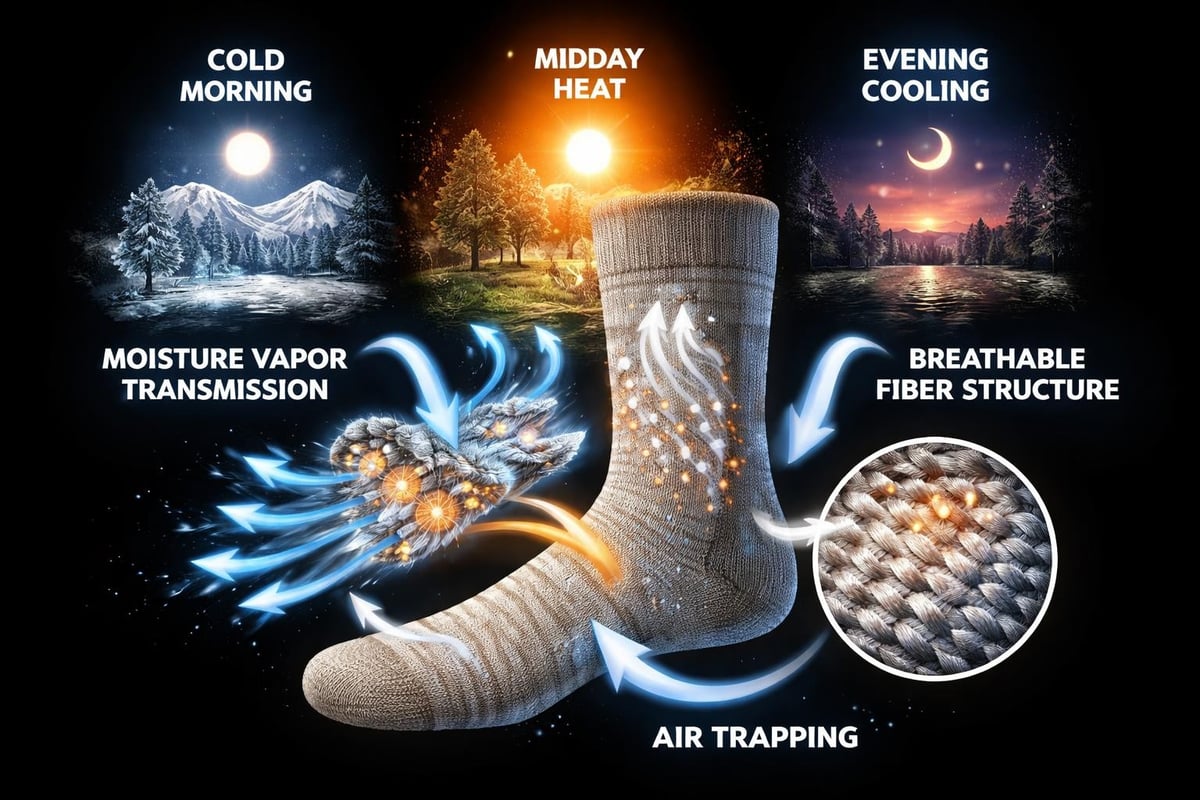
Natural fiber socks for hiking excel at thermoregulation because the fibers themselves respond to environmental changes. Merino wool, for instance, can absorb up to 30% of its weight in moisture vapor before feeling wet to the touch. This creates an insulating air layer that keeps feet warm in cold conditions while remaining breathable during summer hikes.
Key temperature benefits include:
- Active moisture vapor transmission away from skin
- Insulation that works even when damp
- Cooling effect in hot weather through evaporative wicking
- Adaptation to changing elevation and climate zones
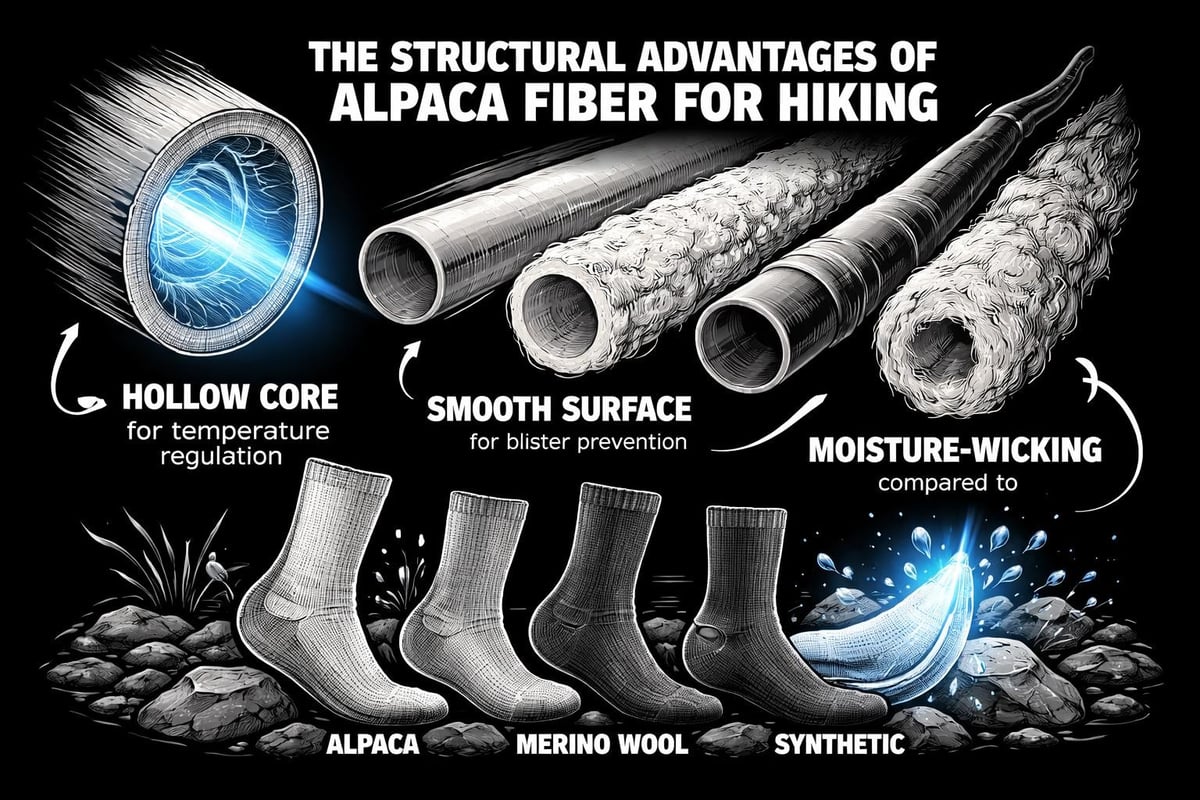
Alpaca fibers take this concept further with hollow fiber cores that trap warm air without bulk. Alpaca socks offer superior advantages for hikers seeking lightweight warmth and exceptional breathability on challenging terrain.
Moisture Management That Actually Works
Synthetic moisture-wicking technologies have improved dramatically, yet they still pale compared to natural fibers' built-in capabilities. The molecular structure of wool and alpaca creates hydrophobic exteriors while maintaining hydrophilic cores, meaning these fibers repel liquid water while absorbing and transmitting moisture vapor.
| Fiber Type | Moisture Absorption | Wicking Speed | Dry Time | Odor Resistance |
|---|---|---|---|---|
| Merino Wool | 30% of weight | Fast | Moderate | Excellent |
| Alpaca | 25% of weight | Very Fast | Fast | Superior |
| Bamboo | 40% of weight | Very Fast | Very Fast | Excellent |
| Synthetic (polyester) | Minimal | Fast | Very Fast | Poor |
This table demonstrates why merino wool socks enhance hiking experiences through superior moisture management that prevents the clammy feeling synthetic socks produce after hours of wear.
Merino Wool: The Gold Standard for Hiking Comfort
Merino wool has dominated the hiking sock market for good reason. This premium natural fiber comes from Merino sheep, producing ultra-fine fibers that feel soft against skin while delivering exceptional performance benefits.
Why Hikers Choose Merino
The outdoor community's preference for merino isn't just marketing hype. This fiber combines practical benefits that directly address common hiking challenges. Expert reviews consistently rank merino wool as the preferred choice for serious trail enthusiasts who demand reliable performance.
Merino's natural crimp creates thousands of tiny air pockets that insulate without weight. The fiber's scales allow it to stretch up to 30% beyond its original length without losing shape, providing a secure fit that prevents bunching and blistering during long-distance hikes.
Performance advantages include:
- Natural antimicrobial properties that prevent odor-causing bacteria
- UV protection from lanolin compounds within the fiber
- Flame resistance for camping safety
- Biodegradability that reduces environmental impact
Choosing the Right Merino Weight
Natural fiber socks for hiking come in various weights suited to different conditions and hiking styles. Lightweight merino works beautifully for summer day hikes and fast-paced trail running, while heavyweight options provide cushioning and warmth for winter backpacking trips.
The merino collection at The Cambridge Sock Company showcases how British craftsmanship elevates this natural fiber through thoughtful construction and attention to detail.
Alpaca Fiber: Premium Comfort for Serious Hikers
While merino dominates mainstream hiking sock conversations, alpaca fiber represents the next evolution in natural performance materials. This South American fiber offers characteristics that surpass even premium merino in several key areas.
Superior Softness Without Itch
Alpaca fibers measure finer than most merino varieties, typically ranging from 18 to 25 microns in diameter. This fineness translates to exceptional softness that won't irritate sensitive skin, even during multi-day hiking trips. Unlike sheep's wool, alpaca contains no lanolin, eliminating allergic reactions some hikers experience with traditional wool products.
The hollow fiber structure makes alpaca remarkably effective for outdoor performance, providing thermal regulation that adapts to changing conditions throughout your hike.
Durability for Long-Term Value
Natural fiber socks for hiking must withstand constant friction, repeated washing, and challenging trail conditions. Alpaca excels in durability testing, with individual fibers showing greater tensile strength than comparable wool. This means your investment in quality alpaca hiking socks pays dividends through extended wear life.
Alpaca durability factors:
- Fiber strength 3-4 times greater than merino
- Resistance to pilling and matting
- Shape retention after multiple wash cycles
- Abrasion resistance on high-friction areas
Discover more about why alpaca socks excel for outdoor enthusiasts who demand premium performance and longevity from their gear.
Bamboo Fiber: The Sustainable Hiking Option
Environmental consciousness drives many purchasing decisions in 2026, and bamboo fiber emerges as an eco-friendly alternative for natural fiber socks for hiking. This rapidly renewable resource grows without pesticides or excessive water, making it attractive to sustainability-minded hikers.
Natural Antimicrobial Properties
Bamboo contains a bio-agent called "bamboo kun" that naturally resists bacteria and fungi. This inherent antimicrobial quality means bamboo socks stay fresher longer between washes, an advantage appreciated during multi-day backpacking trips where laundry access is limited.
Bamboo fiber socks deliver benefits that include superior moisture absorption (up to 40% more than cotton) and remarkable breathability that keeps feet dry during strenuous climbs.
Ultra-Soft Comfort for Sensitive Feet
The smooth, round structure of bamboo fibers creates an incredibly soft fabric that rivals cashmere in luxury feel. For hikers with sensitive skin or those prone to blisters, this smoothness reduces friction points that typically develop into hot spots during long treks.
Selecting the Perfect Natural Fiber Hiking Socks
Choosing optimal socks requires matching fiber properties to your specific hiking conditions, duration, and personal preferences. No single material works best for every situation, which is why understanding each option's strengths helps you build a hiking sock collection that covers all scenarios.
Match Fiber to Hiking Conditions
Different trails and seasons demand specific performance characteristics. Consider these pairing recommendations:
| Condition | Recommended Fiber | Why It Works |
|---|---|---|
| Summer day hikes | Bamboo or lightweight merino | Superior breathability and moisture management |
| Winter backpacking | Heavyweight alpaca or merino | Exceptional warmth-to-weight ratio |
| Multi-day treks | Alpaca or merino | Odor resistance and durability |
| Rocky, technical trails | Alpaca with cushioning | Protection and moisture control |
| Alpine conditions | Merino blend | Temperature adaptability |
Proper Fit Prevents Problems
Even the finest natural fiber socks for hiking fail if they don't fit correctly. Look for hiking-specific construction features like reinforced heels and toes, arch support bands, and seamless toe closures. The sock should fit snugly without restricting circulation, with no excess material bunching in your boot.
Consult a reliable sock size guide to ensure optimal fit across different natural fiber options, as materials like alpaca and merino may fit differently due to their unique stretch properties.
Care and Maintenance for Longevity
Investing in premium natural fiber socks for hiking means learning proper care techniques that preserve their performance properties and extend their lifespan. Natural fibers require slightly different handling than synthetic materials but reward proper care with years of reliable service.
Washing Natural Fiber Hiking Socks
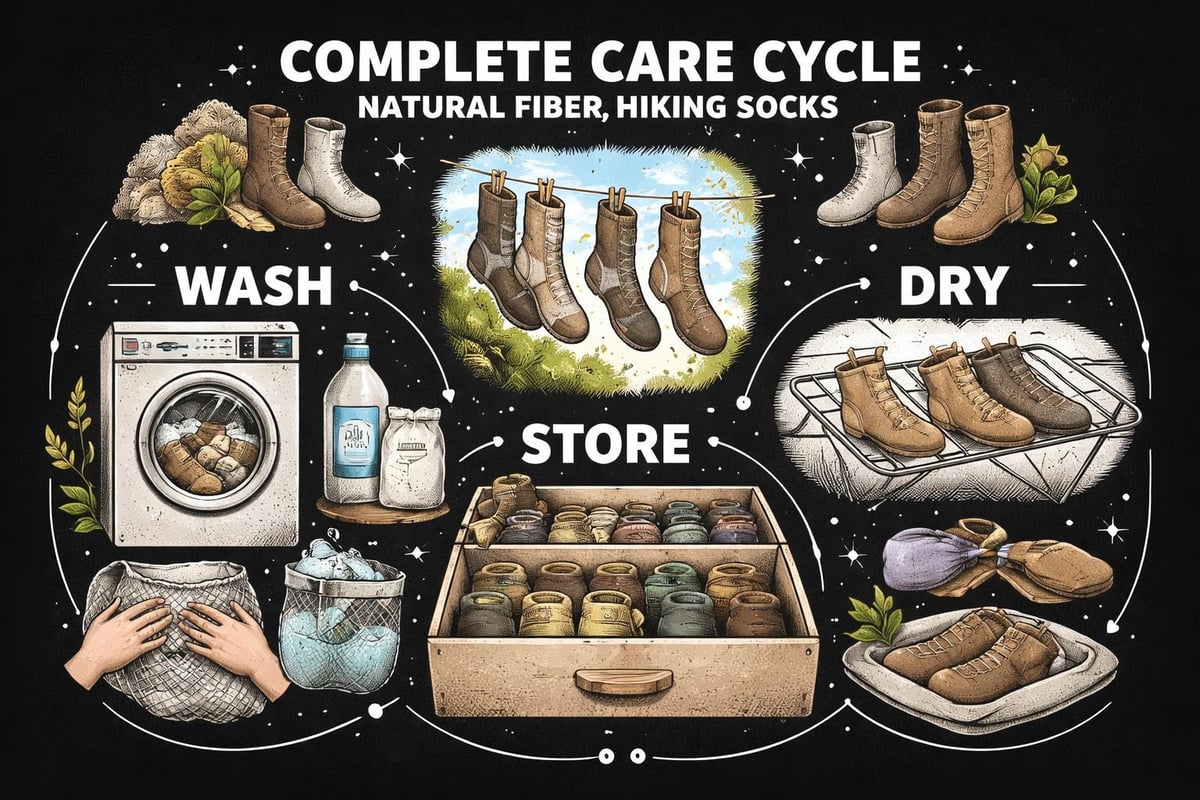
Follow these essential care steps:
- Turn socks inside out before washing to protect outer fibers
- Use cool or lukewarm water (never hot) to prevent felting
- Choose gentle, pH-neutral detergents without bleach or fabric softeners
- Wash with similar colors to prevent dye transfer
- Air dry flat or hanging (avoid machine dryers)
Natural fibers possess self-cleaning properties that reduce washing frequency. Many hikers find they can wear quality merino or alpaca socks for several days between washes, particularly on multi-day treks where washing facilities are unavailable.
Storage Between Adventures
Proper storage maintains fiber integrity during off-seasons. Store clean, completely dry socks in breathable containers away from direct sunlight. Cedar blocks or lavender sachets naturally repel moths without chemical treatments that might damage delicate fibers.
Building Your Natural Fiber Sock Collection
Serious hikers benefit from maintaining a rotation of natural fiber socks for hiking suited to different conditions and trip lengths. This approach ensures you always have appropriate footwear while allowing adequate drying time between wears.
Essential Sock Rotation Strategy
A well-planned collection typically includes:
- 3-4 pairs lightweight socks for summer hiking and fast-paced day trips
- 2-3 pairs midweight socks for spring and fall conditions
- 2-3 pairs heavyweight socks for winter hiking and mountaineering
- 1-2 pairs specialty socks for specific activities like trail running or alpine climbing
The walking sock collection demonstrates how thoughtfully curated options address various hiking scenarios while maintaining premium natural fiber quality.
Blended Fibers: Best of Multiple Worlds
Many premium hiking socks combine natural fibers to optimize performance characteristics. A merino-alpaca blend, for instance, might deliver merino's moisture management with alpaca's superior softness and durability. Small percentages of natural elastane provide stretch without compromising the benefits of primary natural fibers.
When evaluating blends, ensure natural fibers comprise at least 70-80% of the composition to maintain the performance advantages you're seeking from natural fiber socks for hiking.
Performance Benefits on Real Trails
Understanding theoretical advantages matters less than actual performance when you're ten miles into a challenging hike. Real-world testing consistently demonstrates how natural fiber socks for hiking prevent common problems that sideline outdoor adventures.
Blister Prevention Through Multiple Mechanisms
Blisters form when friction, moisture, and heat combine to damage skin layers. Natural fibers address all three factors simultaneously. The moisture management prevents the damp conditions where friction intensifies, while thermal regulation reduces excessive heat buildup. Superior cushioning in properly constructed natural fiber socks distributes pressure across foot surfaces rather than creating concentrated friction points.
Professional gear reviews consistently highlight how quality natural fiber options reduce blister incidents compared to synthetic alternatives during extended hiking tests.
Multi-Day Comfort Without Odor
Extended backpacking trips test sock performance like nothing else. Synthetic socks typically develop noticeable odors within 24-48 hours of continuous wear, while natural fibers like merino and alpaca resist bacterial growth that causes unpleasant smells. This antimicrobial property stems from the fiber structure itself rather than chemical treatments that wash away over time.
Environmental and Ethical Considerations
The outdoor community increasingly values sustainability and ethical production, making natural fiber socks for hiking an aligned choice for environmentally conscious hikers. Unlike petroleum-based synthetics, natural fibers come from renewable sources and biodegrade at end of life.
Sustainable Production Practices
Quality natural fiber producers prioritize animal welfare and environmental stewardship. Look for certifications indicating responsible farming practices, humane animal treatment, and minimal environmental impact during fiber processing.
British manufacturers like The Cambridge Sock Company often maintain transparent supply chains and traditional craftsmanship methods that minimize environmental footprints while supporting local economies.
The Biodegradability Advantage
When natural fiber socks finally reach end of life after years of service, they decompose naturally rather than contributing to microplastic pollution. Wool, alpaca, and bamboo fibers break down completely in landfills or compost, returning nutrients to soil rather than persisting for centuries like synthetic materials.
Specialty Applications and Advanced Options
Beyond general hiking, certain natural fibers excel in specific outdoor scenarios. Understanding these specialized applications helps you select optimal socks for particular adventures.
Cold Weather Mountaineering
Winter expeditions and high-altitude climbing demand maximum warmth without bulk. Heavyweight alpaca excels here, providing exceptional insulation even when damp from snow or perspiration. The hollow fiber structure traps warm air while the smooth exterior sheds ice crystals that might otherwise accumulate.
Trail Running and Fast Hiking
Speed-focused activities require lightweight, low-profile socks that won't cause overheating. Thin merino or bamboo options deliver moisture management and temperature control without the cushioning weight that slower-paced hiking benefits from. Look for targeted cushioning only in high-impact zones like heels and forefoot.
Technical Terrain and Scrambling
Rocky trails with significant elevation gain generate intense friction and require maximum durability. Reinforced alpaca or heavyweight merino with strategic padding protects feet during descents while maintaining breathability during climbs. Specialized boot socks designed for rugged conditions feature enhanced construction in vulnerable areas.
Making the Investment: Value Over Time
Premium natural fiber socks for hiking cost more upfront than basic synthetic options, but analyzing total cost of ownership reveals their superior value proposition. Quality natural fiber socks outlast synthetic alternatives by 2-3 times while delivering better performance throughout their extended lifespan.
Cost Analysis Over Three Years
Consider this comparison for an active hiker completing 50+ trail days annually:
- Synthetic socks: $15/pair, replacement every 6 months = $180 over 3 years for 2 pairs
- Premium natural fiber socks: $35/pair, replacement every 18 months = $140 over 3 years for 2 pairs
The natural fiber option saves money while providing superior comfort, performance, and environmental benefits. Factor in reduced blister treatment costs and improved hiking experiences, and the value proposition strengthens further.
Recognizing Quality Construction
Not all natural fiber socks deliver equal performance. Quality indicators include:
- Seamless toe construction or flat-lock seams
- Graduated compression or arch support bands
- Reinforced high-wear zones (heel, toe, ball of foot)
- Appropriate cushioning density for intended use
- Clear fiber content disclosure (avoid vague "blend" descriptions)
British craftsmanship, like that practiced by premium manufacturers, ensures attention to construction details that transform good materials into exceptional hiking socks.
Natural fiber socks for hiking represent more than a gear upgrade; they're an investment in comfort, performance, and sustainable outdoor practices that enhance every trail experience. When you're ready to elevate your hiking adventures with premium natural fibers crafted through traditional British methods, explore the thoughtfully designed collection at The Cambridge Sock Company, where alpaca, merino wool, bamboo, and cashmere options deliver the perfect blend of heritage quality and modern outdoor performance.