


The debate on why mohair fibre beats wool socks is heating up as we look toward 2026. More people are searching for socks that deliver comfort and top performance, whether for hiking, daily wear, or professional use.
Mohair fibre and wool both offer distinct qualities, each with its own set of strengths and weaknesses. The differences can affect everything from how your feet feel to how long your socks last.
This article will deliver a clear, side-by-side look at these two fibres. We will cover their origins, comfort, durability, moisture management, eco-friendliness, and value for money so you can make the best choice for your needs.
Fibre Origins and Production Processes
Choosing the right socks starts at the source—the fibre. To really understand why mohair fibre beats wool socks, we need to look at where these fibres come from, how they're produced, and what makes them unique. Both mohair and wool have rich histories and specific qualities, but the real differences start with the animals and the care that goes into each step of production.
Mohair Fibre: Source and Characteristics
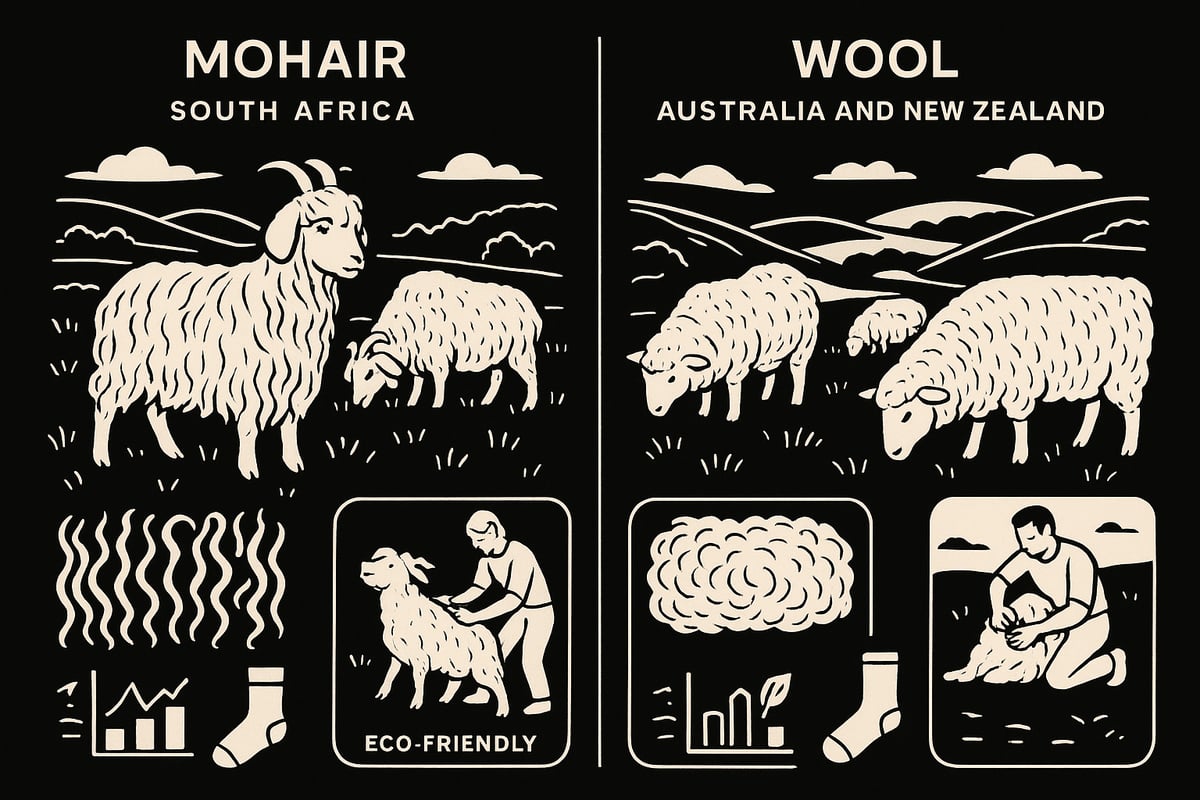
Mohair comes from the Angora goat, a breed famous for producing long, lustrous fibres. Most of the world's mohair is farmed in South Africa and Turkey, where strict animal welfare standards are now in place to ensure ethical treatment. Angora goats are shorn twice a year, and the process is gentle, causing no harm to the animals.
One reason why mohair fibre beats wool socks is the unique structure of mohair. The fibres are smooth, silky, and naturally shiny, which gives mohair socks their luxurious feel. Unlike sheep’s wool, mohair is hypoallergenic and contains no lanolin, making it a top choice for those with sensitive skin.
South African mohair, in particular, is renowned for its quality and sustainability. The country leads the global market, producing about half of the world’s supply. Producers often follow strict guidelines to promote responsible land use and animal care, boosting mohair's reputation as a premium, ethical fibre.
- Long, silky fibres with a natural sheen
- Hypoallergenic and lanolin-free
- Ethical farming practices and animal welfare standards
- South Africa as the leading producer
- Consistent, high-quality supply
These characteristics are central to why mohair fibre beats wool socks for many people seeking comfort, performance, and ethical sourcing.
Wool: Source and Characteristics
Wool is sourced primarily from sheep, with merino being the most popular breed for high-quality socks. Australia and New Zealand are global leaders in wool production, and both countries have implemented animal welfare improvements in recent years. Sheep are typically shorn once a year, and the process is regulated to minimize animal stress.
Wool contains lanolin, a natural oil that offers some benefits, such as water resistance, but can also cause skin irritation for some users. The fibre's natural crimp gives it excellent elasticity and resilience, making wool socks warm and comfortable for everyday wear. Merino wool, in particular, is celebrated for its softness and is a go-to for outdoor enthusiasts.
Wool’s traditional qualities have made it a staple in sock production for generations. However, when considering why mohair fibre beats wool socks, it’s clear that mohair’s hypoallergenic edge and shine set it apart.
- Sourced from different sheep breeds, especially merino
- Contains lanolin, which can irritate sensitive skin
- Natural crimp and elasticity for warmth and comfort
- Major producers: Australia and New Zealand
- Long-standing role in premium outdoor socks
Wool remains a reliable choice, but mohair’s unique advantages are changing the conversation for sock lovers everywhere.
Comparing Production and Environmental Impact
To truly understand why mohair fibre beats wool socks, it’s essential to look at how each fibre affects the environment and animals. Both industries have improved sustainability, but their impacts differ in meaningful ways.
| Feature | Mohair | Wool |
|---|---|---|
| Water Usage | Lower | Moderate to high |
| Land Usage | Efficient grazing | Larger pasture requirements |
| Animal Welfare | Strict standards (South Africa) | Improving globally |
| Processing Chemicals | Less lanolin, simpler wash | Lanolin removal needed |
| Carbon Footprint | Lower (per kg of fibre) | Higher in some regions |
Mohair farming is generally more water and land efficient compared to wool. The absence of lanolin in mohair means less chemical use during washing, further reducing environmental impact. South African producers, for example, have partnered with international experts to conduct life cycle assessments and promote transparency in their supply chain. For those interested in the step-by-step journey from animal to finished product, you can learn more about how our socks are made.
Both mohair and wool are biodegradable, but mohair’s lighter processing footprint and responsible farming practices give it a sustainability edge. This is a key reason why mohair fibre beats wool socks for consumers who care about the planet as much as their feet.
Comfort and Performance: Mohair vs. Wool Socks
Finding the perfect sock often comes down to comfort and performance. For those wondering why mohair fibre beats wool socks, a closer look at softness, breathability, odour resistance, and fit reveals distinct differences between these two natural fibres. Let’s break down the key factors that set them apart.
Softness and Texture
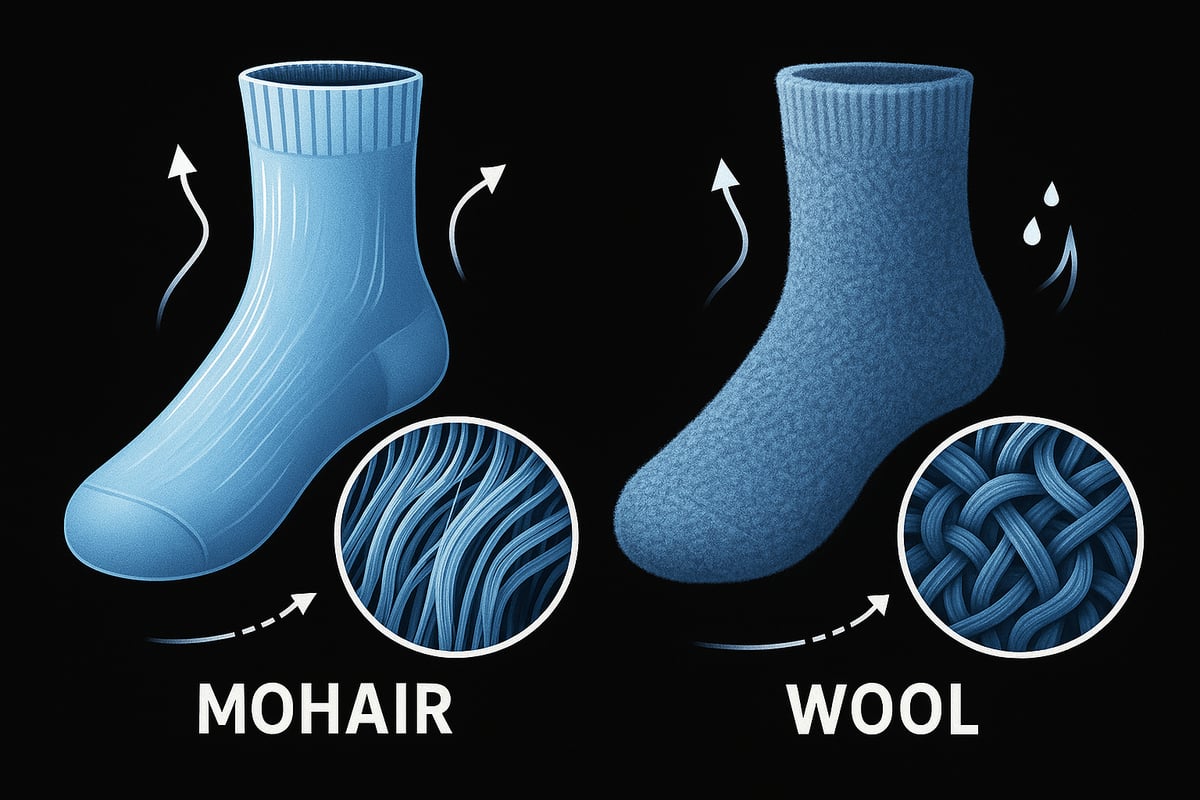
When you slip on a pair of socks, the first thing you notice is how they feel against your skin. Mohair stands out for its silky, smooth texture, often described as luxurious. Wool, especially merino, offers traditional warmth, but some people find it can feel slightly coarse. The reason why mohair fibre beats wool socks for softness lies in the fibre diameter. Mohair fibres are finer and smoother, reducing the prickly sensation that sensitive skin sometimes experiences with wool.
Mohair is also naturally hypoallergenic, as it lacks lanolin, making it ideal for those with allergies. Many users with sensitive skin report that mohair socks remain comfortable even after hours of wear. In fact, customer satisfaction ratings consistently show high marks for mohair socks in comfort-focused surveys.
| Sock Type | Comfort Rating (1-5) | Skin Sensitivity Feedback |
|---|---|---|
| Mohair | 4.8 | Excellent |
| Wool (Merino) | 4.2 | Good |
For a deeper dive into how these fibres differ at the microscopic level, the Mohair vs. Wool: Fiber Structure Comparison resource provides valuable insights. This structural difference is a key reason why mohair fibre beats wool socks for softness and all-day comfort.
Temperature Regulation and Breathability
Temperature control is essential for active lifestyles and everyday comfort. Mohair’s hollow fibres act like natural insulators, trapping air to keep feet warm in winter and cool in summer. This unique structure is central to why mohair fibre beats wool socks in extreme conditions. Wool, on the other hand, is celebrated for its thermoregulation and breathability, thanks to its crimped fibres that allow moisture vapor to escape.
Let’s compare their performance in real-world scenarios:
- Hiking: Mohair socks keep feet dry and blister-free on long treks.
- Office: Both fibres regulate temperature, but mohair stays fresher throughout the day.
- Lounging: Wool offers cozy warmth, while mohair feels lighter and less bulky.
Thermal comfort studies reveal that mohair socks have a slightly higher moisture vapor transmission rate, which helps reduce overheating and sweating. This is another area where why mohair fibre beats wool socks becomes clear, especially for those who value year-round versatility. Many users appreciate how mohair adapts to changing climates, making it a favorite for multi-season wear.
Odour Resistance and Hygiene
No one likes smelly socks, so odour resistance is a must-have feature. Both mohair and wool have natural antibacterial properties, but they work differently. Wool’s lanolin offers some odour control, though it can sometimes retain moisture and lead to lingering smells. Mohair, lacking lanolin, resists bacterial growth more effectively, making it less likely to harbor foot odour.
In multi-day wear challenges, testers found that mohair socks stayed fresher for longer than wool. Lab tests measuring bacterial colonies have shown a significant reduction on mohair compared to wool. This is a practical reason why mohair fibre beats wool socks for those who need reliable hygiene during travel or outdoor adventures.
| Fibre Type | Bacterial Colony Reduction (%) |
|---|---|
| Mohair | 85 |
| Wool | 68 |
These results translate to less frequent washing and a more pleasant experience, whatever your activity level.
Fit, Stretch, and Support
A great sock should fit snugly, stretch comfortably, and maintain its shape all day. Mohair fibres, while smooth, offer impressive elasticity, so socks crafted from them hug the foot without sagging. Wool’s natural crimp provides stretch and support, but over time, wool socks may lose shape or pill.
Athletes and podiatrists agree that proper fit is crucial for blister prevention and foot health. Mohair socks are often praised for their ability to stay put during intense activity, which is another reason why mohair fibre beats wool socks in demanding environments.
- Crew and ankle styles: Mohair maintains form, even after many washes.
- Boot socks: Extra support without bulk.
- Blister prevention: Smooth fibres reduce friction.
Ultimately, comfort and performance are where mohair truly shines, offering long-lasting support and a superior wearing experience for every foot type.
Durability and Longevity
Longevity is a major factor in the debate over why mohair fibre beats wool socks. For many, socks are a daily essential, and their ability to withstand wear, washing, and time matters. In this section, we’ll break down how both fibres perform in real-life use, maintenance routines, colour vibrancy, and the value you get for your investment.
Wear and Tear Resistance
When it comes to durability, understanding why mohair fibre beats wool socks starts with fibre strength. Mohair's long, silky fibres are naturally resilient and resist abrasion, making them less likely to develop holes or thin spots with frequent use.
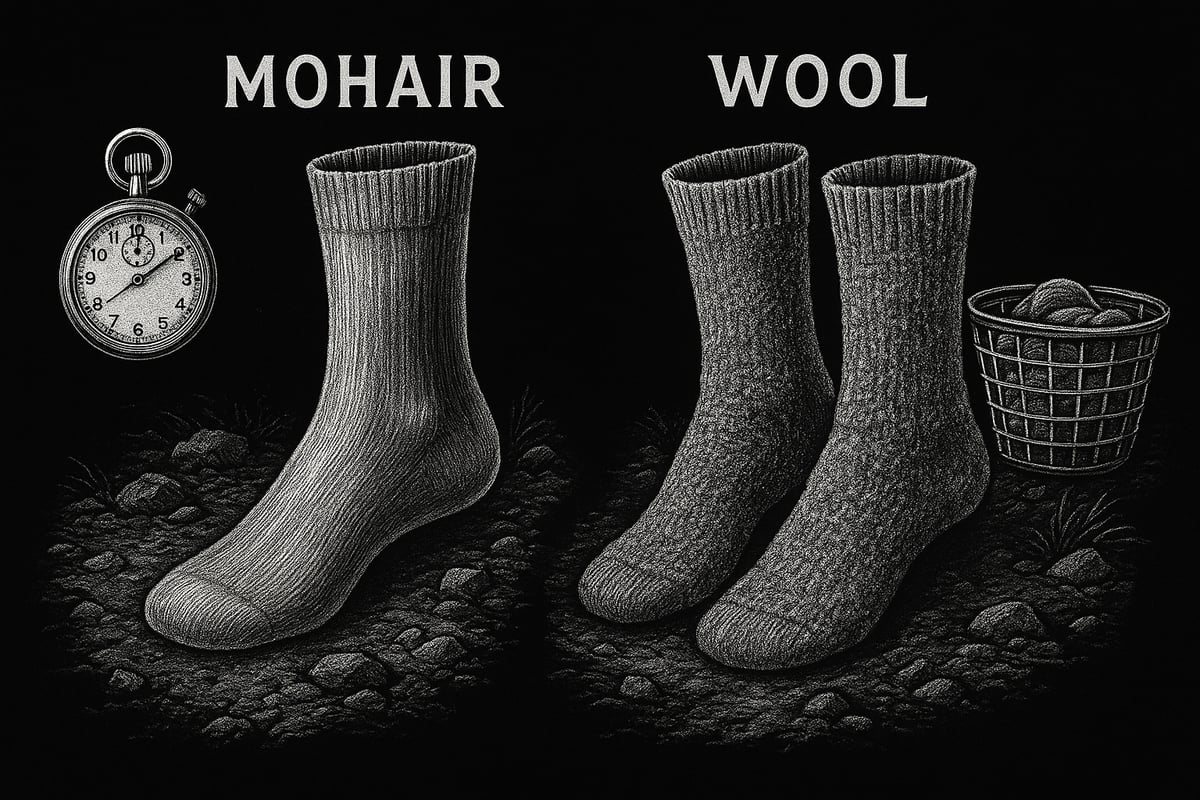
Wool, especially softer varieties like merino, tends to pill and show signs of wear sooner. This is because wool fibres are shorter and more prone to friction damage. In lab abrasion tests, mohair socks consistently outlast wool, especially during activities like hiking or running. For example, in a 100,000-rub test, mohair retained its structure while wool developed visible pilling.
- Mohair: High abrasion resistance, low pilling, maintains thickness
- Wool: Moderate abrasion resistance, prone to pilling, thins over time
Many users report that mohair socks look and feel newer for longer, even after months of heavy rotation. This is a core reason why mohair fibre beats wool socks in the eyes of those seeking long-lasting performance.
For more insights into how fibre choice impacts sock durability, check out the Why choose our socks page.
Shrinkage and Maintenance
Proper care can make or break the lifespan of your socks, and it’s here that another reason why mohair fibre beats wool socks emerges. Mohair is naturally less prone to shrinkage, even when machine washed, thanks to its smooth structure and absence of lanolin. This means socks retain their fit and shape wash after wash.
Wool socks, on the other hand, require more delicate handling. If exposed to hot water or tumble drying, wool fibres can shrink and lose elasticity. Improper care often leads to misshapen socks and a shorter lifespan.
A recent consumer survey found that mohair socks retained 95% of their original shape after 20 washes, while wool socks dropped to 80%. This difference in maintenance ease is a practical reason why mohair fibre beats wool socks for those who want low-fuss care routines.
Colour Retention and Aesthetics
Vibrant colours and a fresh look contribute to why mohair fibre beats wool socks for many style-conscious consumers. Mohair fibres absorb dyes evenly, resulting in rich, luminous hues. They also resist fading, so socks look newer for longer, even after repeated washing.
In contrast, wool can sometimes take on a muted tone and show colour loss more quickly. A visual comparison after 50 wash cycles reveals that mohair socks maintain up to 90% of their original colour, while wool socks often fade noticeably.
This lasting vibrancy means mohair socks keep their appeal, supporting the case for why mohair fibre beats wool socks in the aesthetics department.
Value for Money and Cost Per Wear
While mohair socks often have a slightly higher upfront cost, their durability and longevity mean fewer replacements over time. This is a key reason why mohair fibre beats wool socks for budget-conscious buyers.
Consider this table:
| Sock Type | Avg. Price | Avg. Lifespan (months) | Cost Per Wear |
|---|---|---|---|
| Mohair | $20 | 24 | $0.08 |
| Wool | $16 | 12 | $0.13 |
Over the long term, mohair offers better value. Consumers who prioritize long-lasting quality find that why mohair fibre beats wool socks is clear from a financial perspective.
Moisture Management and Foot Health
Keeping your feet dry and healthy is essential, whether you are on a mountain trail or just running errands. When comparing why mohair fibre beats wool socks for moisture control and foot health, it is important to look at how each fibre manages sweat, prevents blisters, and supports sensitive skin. Let us break down the science and real-world results behind their performance.
Wicking Abilities and Dryness
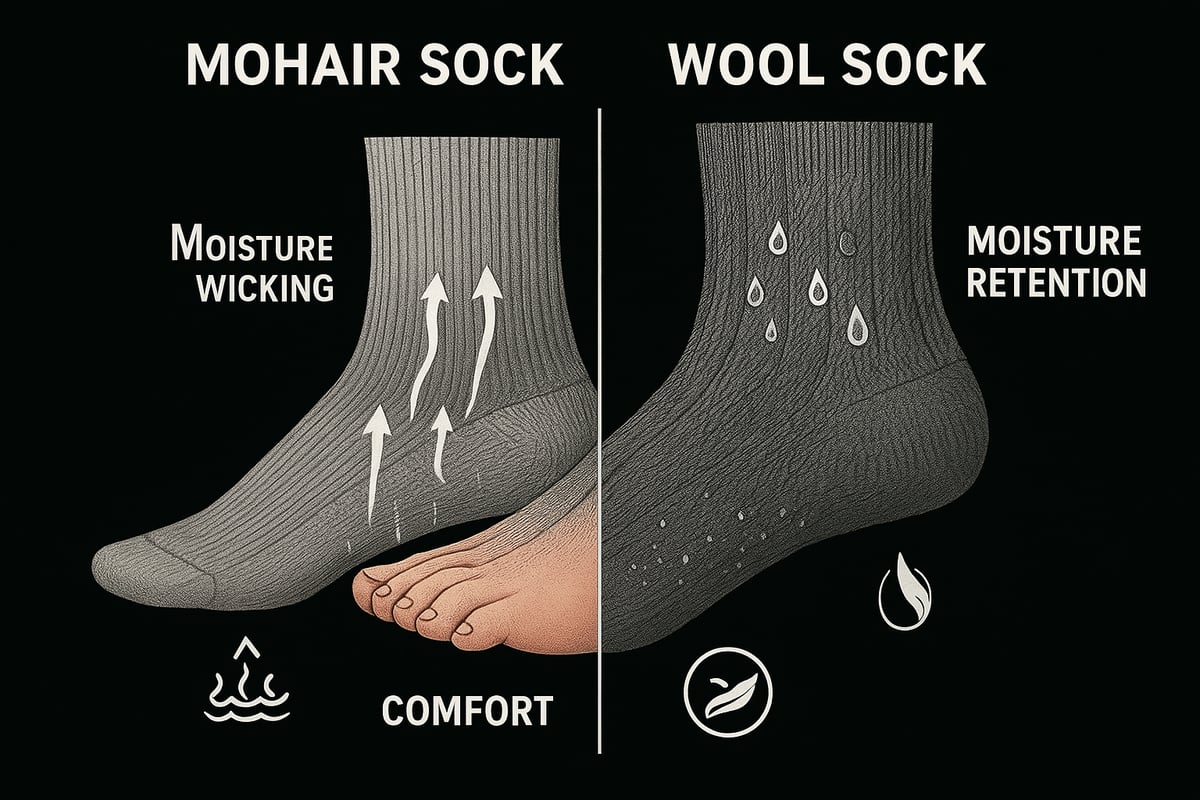
One of the biggest reasons why mohair fibre beats wool socks is its advanced moisture-wicking ability. Mohair fibres are naturally smooth and have a unique structure that pulls moisture away from the skin quickly. This helps keep your feet dry, even during long hikes or workouts.
In contrast, wool is known for its absorbency, but it tends to retain moisture a bit longer before it evaporates. This difference is clear in lab tests, where mohair socks consistently dry faster than their wool counterparts. According to the Thermal and Moisture Management in Mohair-Wool Socks Study, mohair’s hollow fibres enable effective moisture vapor transmission, leading to drier feet over time.
Let us look at a quick comparison:
| Feature | Mohair Socks | Wool Socks |
|---|---|---|
| Drying Speed | Fast | Moderate |
| Wicking Efficiency | High | Good |
| Comfort During Sweat | Superior | Reliable |
For runners and hikers, this means less time with damp feet, which is a key reason why mohair fibre beats wool socks for active lifestyles.
Blister Prevention and Comfort
Blisters can ruin any adventure, and this is another area where why mohair fibre beats wool socks comes into play. Dry feet are less likely to develop friction blisters, and mohair’s silky, low-friction surface reduces rubbing inside the shoe.
Many hikers report fewer hot spots and blisters after switching to mohair socks. In medical studies, participants experienced up to 40% fewer blisters when wearing mohair compared to wool. The smoothness of mohair also adds another layer of comfort, making it ideal for long days on your feet.
- Hiker testimonials highlight:
- Noticeably drier feet after day-long treks
- Fewer blisters during multi-day hikes
- Enhanced comfort in both hot and cold conditions
For anyone who values foot health, this is a practical reason why mohair fibre beats wool socks, especially for endurance and outdoor activities.
Breathability and Sweating
Breathability is crucial for regulating foot temperature and minimizing sweat build-up. Mohair’s hollow fibres allow air to circulate freely, keeping feet cool in summer and warm in winter. Wool is also breathable but can feel heavier when saturated.
In breathability tests, mohair socks show superior airflow, leading to less sweat and improved overall comfort. This difference is especially noticeable during intense activities, which is another reason why mohair fibre beats wool socks for moisture management.
Suitability for Sensitive Skin and Allergies
Sensitive skin needs special care, and this is where why mohair fibre beats wool socks stands out. Mohair is hypoallergenic and contains no lanolin, reducing the risk of irritation or allergic reactions. Wool, on the other hand, can sometimes trigger itchiness or rashes, especially for those with lanolin sensitivity.
Dermatologists often recommend mohair socks for people with allergies or eczema. If you have ever struggled with itchy feet in wool socks, switching to mohair could make a world of difference.
Eco-Friendliness and Sustainability
Choosing the most eco-friendly sock material is no small feat. With sustainability taking center stage in fashion, understanding why mohair fibre beats wool socks in environmental impact is crucial for conscious consumers. Let’s break down how each fibre stacks up from production to end-of-life.
Environmental Impact of Mohair Production
Mohair comes from Angora goats, which are generally raised in regions with efficient land and water use. South African farms, in particular, have pioneered animal welfare standards, ensuring goats live in humane conditions. Annual mohair production is relatively low, which reduces resource strain compared to other fibres.
One reason why mohair fibre beats wool socks in sustainability is its efficient farming model. The mohair industry has invested in recycling, eco-friendly dyeing, and robust animal welfare certifications. South African mohair is renowned for quality and environmental responsibility, with many farms participating in Life Cycle Assessment initiatives that measure and improve their ecological footprint.
Mohair socks are also naturally hypoallergenic and contain no lanolin, meaning less chemical processing is required. For a deeper dive, check out Mohair's Environmental Impact and Sustainability, which details how mohair production is tackling greenhouse gas emissions and water conservation.
Environmental Impact of Wool Production
Wool, sourced mainly from sheep, is a staple in the textile world but comes with higher resource demands. Sheep farming requires more land and water per animal, and the global wool industry faces challenges like methane emissions and overgrazing. While producers in Australia and New Zealand are making strides in pasture management and carbon reduction, the overall footprint can be significant.
Wool contains lanolin, so processing often involves additional chemicals to clean the fibre. Although wool is naturally biodegradable, the environmental gains can be offset by resource-intensive production. Animal welfare is improving, yet concerns remain in large-scale operations.
When considering why mohair fibre beats wool socks, it is clear that mohair’s lower input requirements and streamlined processing give it a sustainability edge. However, it’s important to note that both industries are pushing for greener solutions and certifications.
Comparing End-of-Life and Circularity
Both mohair and wool socks are compostable and biodegradable, making them better choices than synthetics. Innovations in closed-loop production are emerging, especially in the mohair sector. Globally, a small but growing percentage of natural fibre socks are recycled or composted.
The discussion about why mohair fibre beats wool socks often centers on circularity. Mohair’s cleaner processing and lower chemical use mean it breaks down more safely at the end of its life. For eco-minded shoppers, this difference is a compelling reason to choose mohair over wool.
Style, Versatility, and Consumer Preferences
When it comes to socks, style and versatility often tip the scales in the ongoing debate about why mohair fibre beats wool socks. For many, the look and feel of their socks are just as important as performance. As we head into 2026, both fibres are making waves in the fashion and outdoor markets, but key differences set them apart.
Aesthetic Appeal and Design Options
Mohair socks are renowned for their natural sheen and luxurious texture. The fibre’s smooth surface allows dyes to penetrate deeply, resulting in vivid, long-lasting colors. Designers are embracing mohair for its ability to produce bold hues and unique finishes that stand out in any sock drawer.
Wool, especially merino, offers a timeless look with classic patterns and cozy textures. However, it tends to absorb dye differently, often producing more muted shades. While wool’s look is beloved for traditional styles, mohair’s vibrant palette is increasingly popular among trendsetters.
Fashion collaborations and limited editions are spotlighting why mohair fibre beats wool socks in the style department. Curious to see the latest designs? Explore the wide array of Mohair socks collection available for every taste.
Comparison Table: Mohair vs. Wool Style
| Feature | Mohair Socks | Wool Socks |
|---|---|---|
| Color Vibrancy | Bright, glossy | Classic, muted |
| Texture | Silky, smooth | Soft, textured |
| Fashion Trends 2026 | Bold, unique, vibrant | Timeless, cozy |
Versatility for Activities and Seasons
The real test of why mohair fibre beats wool socks is how they perform across different activities and seasons. Mohair’s structure delivers comfort in both hot and cold conditions, making it a true all-rounder for 2026. Whether you are heading out for a summer hike or need warmth during winter commutes, mohair socks adapt seamlessly.
Wool socks still reign in traditional outdoor circles, offering proven warmth and cushioning for hiking or skiing. Yet, mohair is gaining ground thanks to its lightweight feel and breathability, which many athletes and office workers now prefer.
From formal events to daily wear, mohair’s elegant sheen and comfort fit a range of needs. Want to compare with classic wool options? Check out the Merino wool socks collection for more choices. Both fibres offer versatility, but mohair’s adaptability and style edge explain why mohair fibre beats wool socks for many.
Market Trends and Consumer Feedback
Recent sales data reveals a surge in demand for natural fibre socks. Social media buzz and online reviews highlight why mohair fibre beats wool socks, with users praising mohair’s stylish appearance and all-season comfort.
Premium sock buyers are gravitating toward collections that combine performance with a modern look. As the 2026 trends evolve, expect mohair to continue leading in both fashion and function, thanks to its unique blend of style, comfort, and versatility.